

“Play something.”
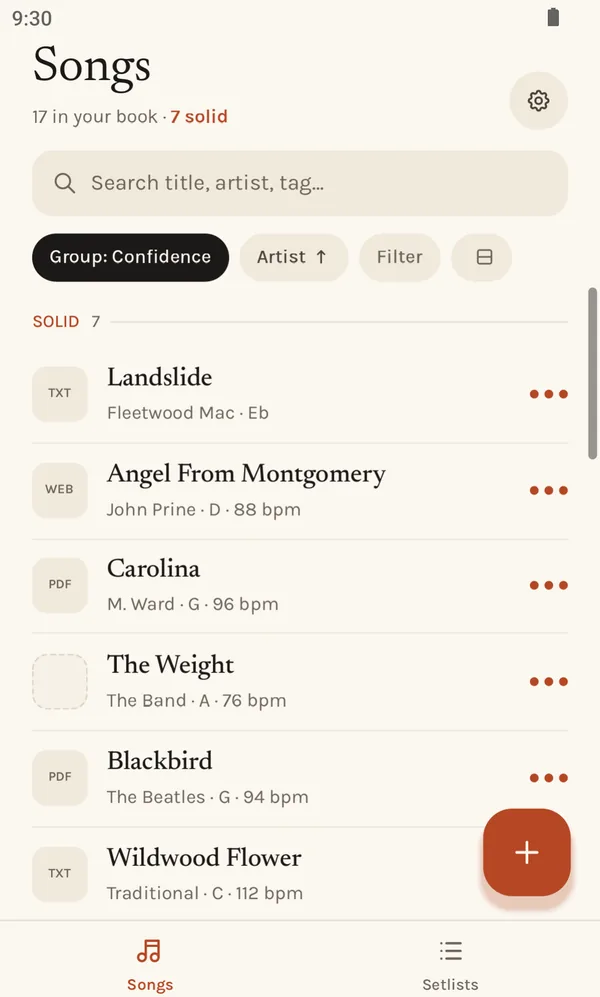
The question gets hard at exactly the moment it is asked. Your book answers it in advance: every song is marked solid, rusty or still learning, and the library opens already sorted that way — the ones you could start this second, then the ones that want a run-through first.
Mark them as you go. Sort by what you have not played in months when you want to bring something back.
“There's no signal here.”
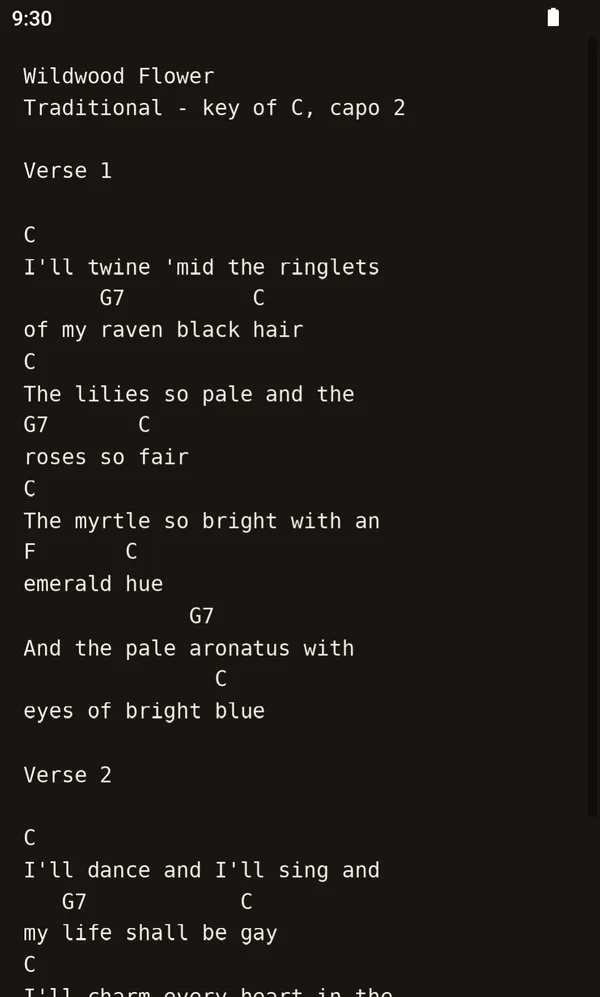
The campsite three hours up a fire road. The basement. The green room with one bar. Charts live on the phone, not on a page that has to load: PDFs drawn a page at a time with zoom and rotate, webpages you pasted in once while you had signal, and lyrics and chords you typed yourself in a monospaced field, so the chords stay over the syllables you put them over.
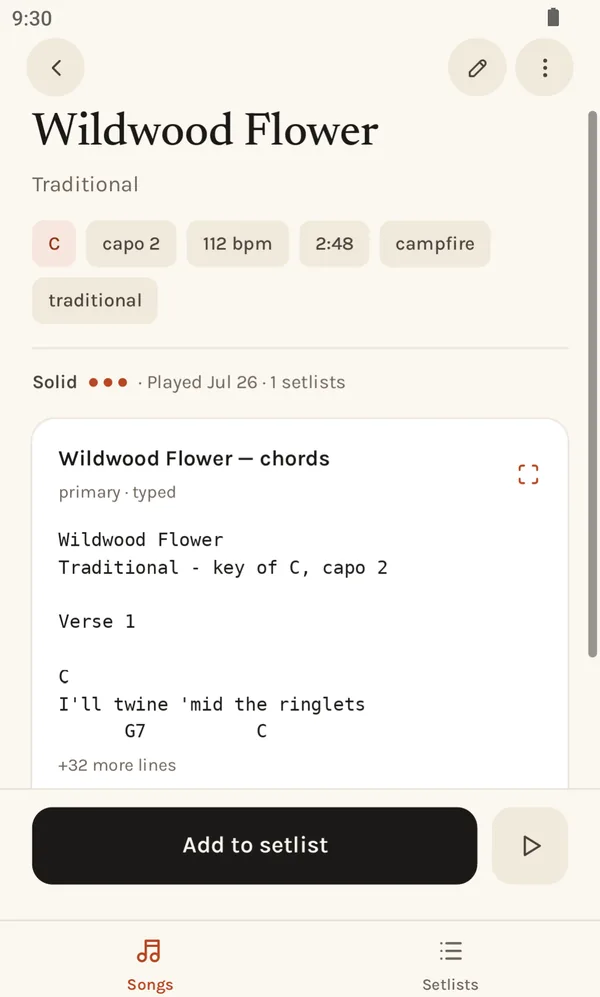
A song can hold more than one chart — the fingerstyle arrangement and the three-chord version of the same tune — and opens on whichever you made primary.
“I remember the second verse. I don't remember the title.”
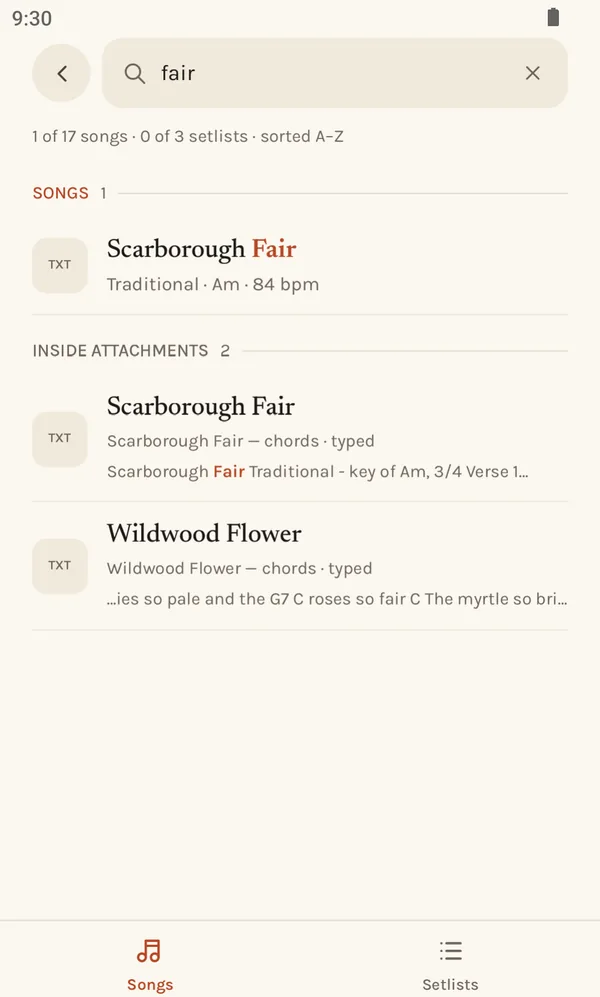
Search reads the words inside your charts, typed and captured alike, as well as titles, artists and setlists. Half a line is enough.
“How long does the set actually run?”
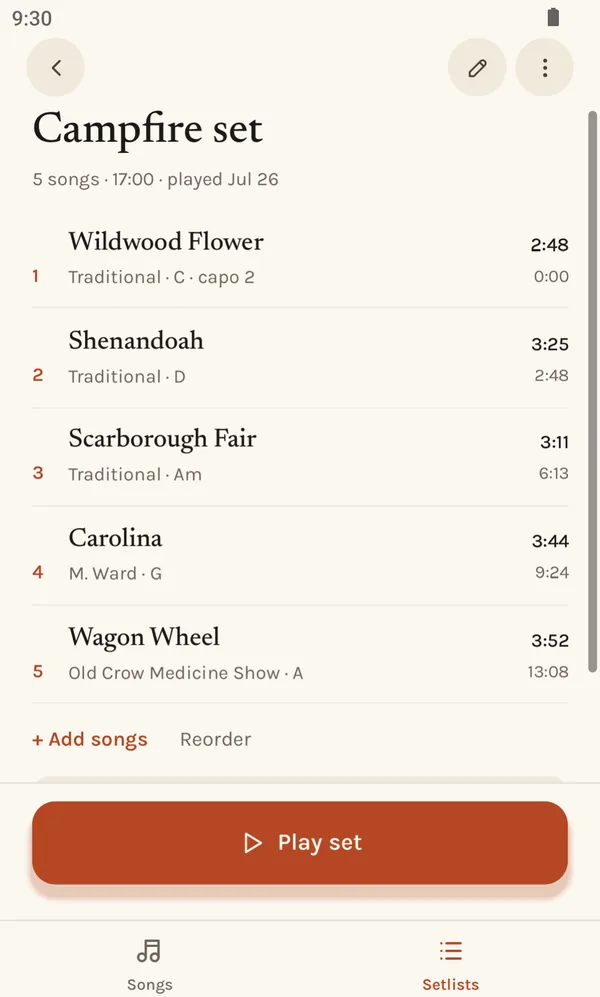
Build it, put it in the order you want, and watch the running time add up beside it — so you find out at home that you are nine minutes short, not on stage. A song with nothing to read from is flagged while you can still do something about it.
Then one tap starts the set. The chart fills the screen at a size you can read from a music stand, the top bar says where you are, the bottom says what is coming next, and the screen stays awake until the set is over.
What a song holds
A title and an artist are all that is asked for. Key, capo, tuning, tempo, length, tags, notes, when you last played it and how solid you are on it are all optional, and the form keeps them folded away until you want them.
What it doesn't do
- permissions
- INTERNET, for pages you paste in yourself
- analytics
- none
- crash reporting
- none
- advertising
- none
- accounts
- none
- your library
- app-private storage, on the device
- cloud backup
- off
- backups
- one zip file, when you export one
- licence
- GPL-3.0-or-later
- this page
- no third-party requests
A test fails the build if a second permission ever appears in the manifest, and another holds the one HTTP call site to a single file. The last line is checkable the same way: open the network tab.
Get it
On Google Play. It builds from source too, onto a laptop or onto a phone — the instructions are in the repository, and the licence means the source travels with any copy of the app.